A brief description of the Jewish community and cemeteries of Rohatyn, Ivano-Frankivsk Oblast, Ukraine,
together with information about the Jewish headstone recovery project there, and the documentation project which created this database.
Relevant information sources are at the end of this page.
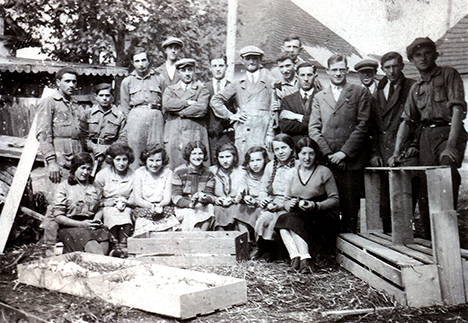
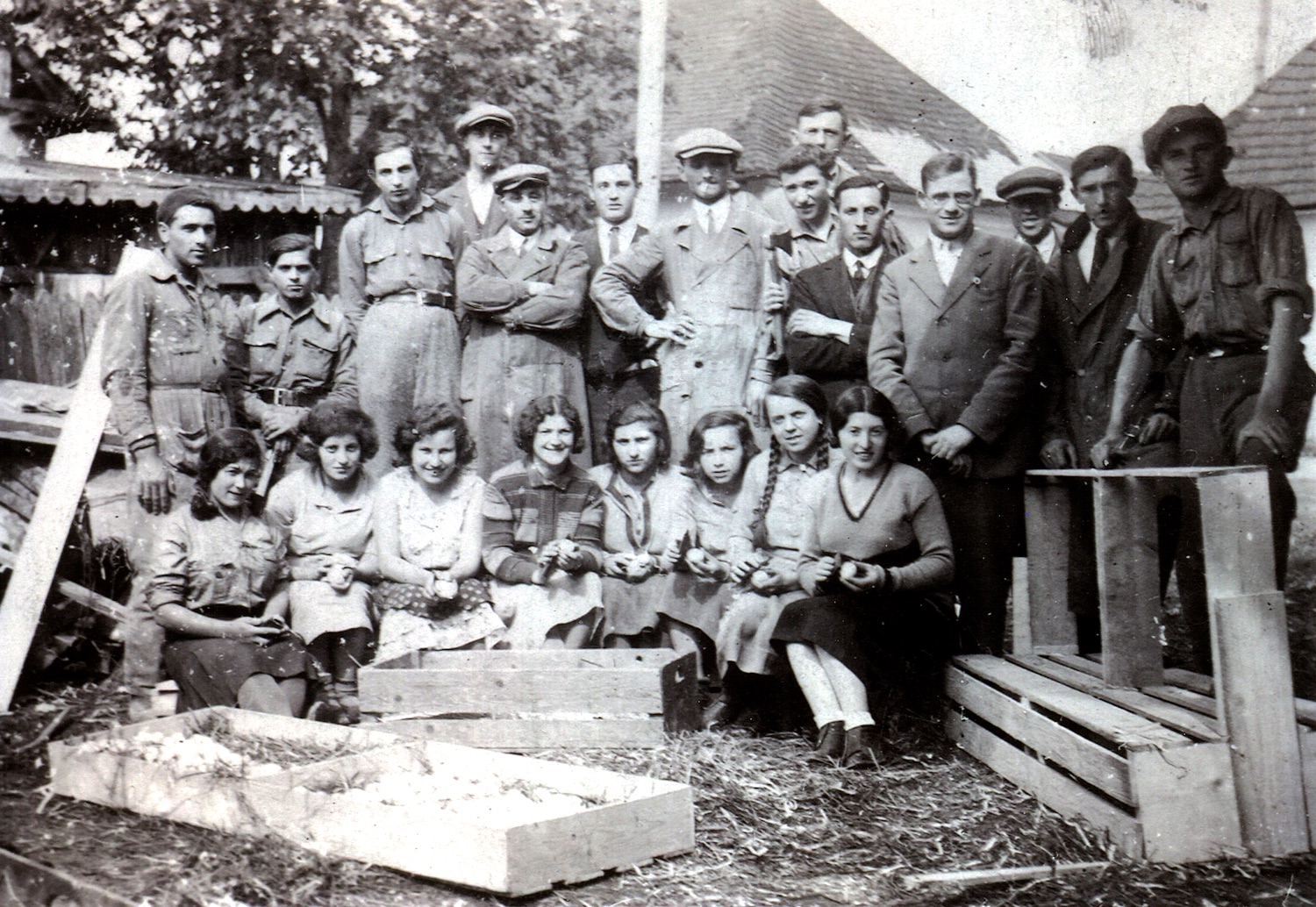
Jewish wholesale egg packing in Rohatyn, interwar period. Source: Steinmetz Family Collection.
Jews were present in Rohatyn since the 15th century, and settled as
residents in Rohatyn as early as the middle of the 16th century. The Jewish
community formed an integral and dynamic part of Rohatyn life for four
centuries, until the Holocaust. In 1633, the Jewish community of Rohatyn
was granted privileges by the Polish king Władysław IV Waza, giving
them municipal rights to build a synagogue and a cemetery, and to trade.
Over time the community grew and diversified; during the late Austrian
era (second half of the 19th century) when Rohatyn was part of the
Kingdom of Galicia, the town's more than 3000 Jews comprised over 40%
of the total population of Rohatyn and its adjacent village of Babintsi.
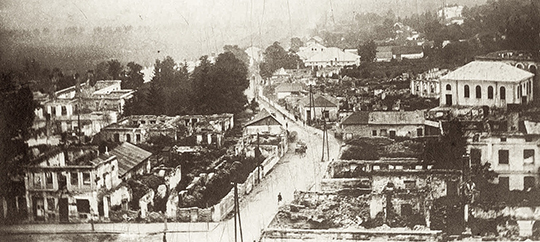
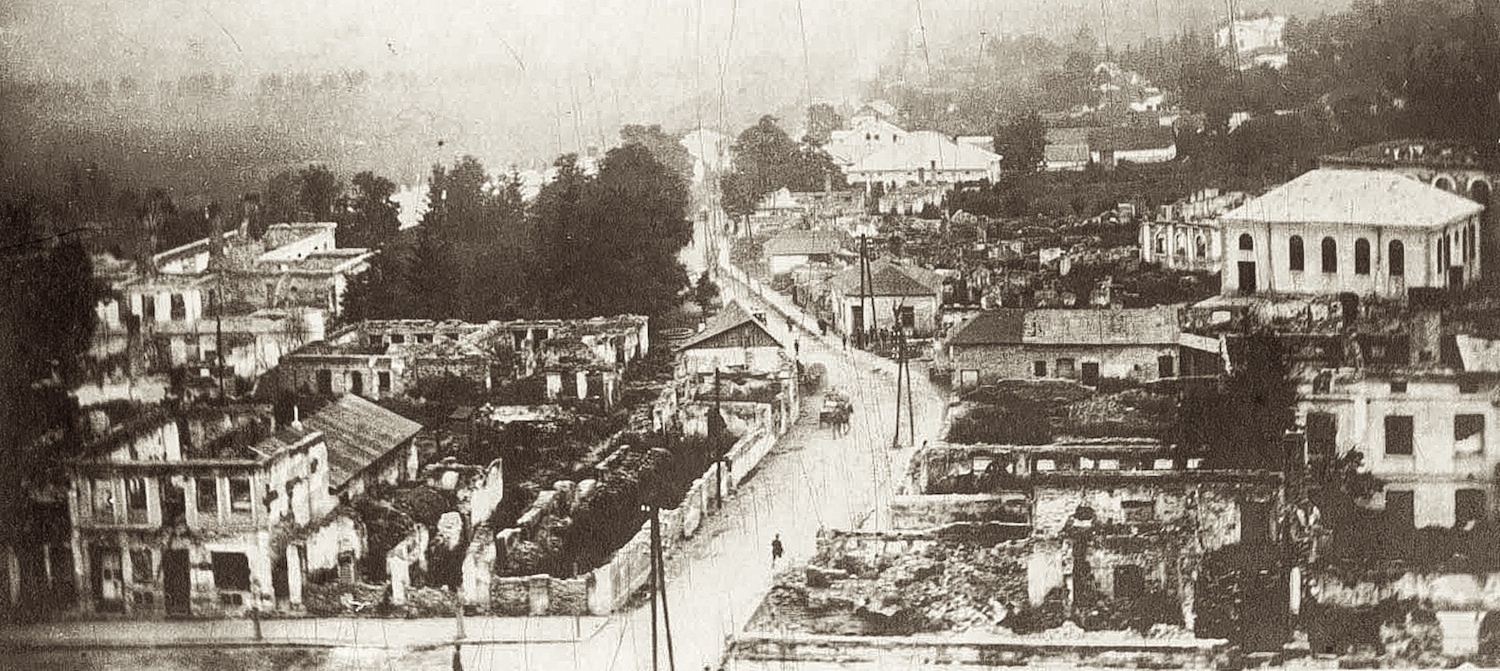
A bird's-eye view of the destruction of Rohatyn in WWI. Source: Tomasz Wiśniewski Collection.
During World War I, Rohatyn was
engulfed in battles of the eastern front
and alternately occupied by Russian forces and the allied armies of
Austria-Hungary, Germany, and the Ottoman Empire. In two waves of the
shifting front during the first year of the war, the town was burned by the
retreating Russian army, destroying most of Rohatyn's building stock
including Jewish homes and synagogues. During the
second retreat in 1915, Russians forcibly deported more
than 500 Jewish men from Rohatyn to Kyiv and then to
Chembar (Belinsky), Russia; the men were unable to
return to Rohatyn until 1917. From 1916 the Central
Powers armies led by Germany established a military
camp and training center outside of Rohatyn, where they
remained as reserves behind the front line for most of the
rest of the war. A number of Rohatyn Jews served in the
Austro-Hungarian army during this time, until the defeat
of the Central Powers in the west and the collapse of the three empires
in the alliance.
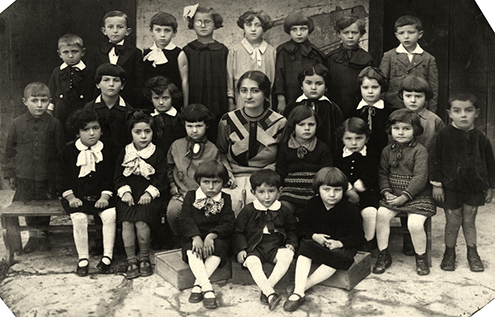
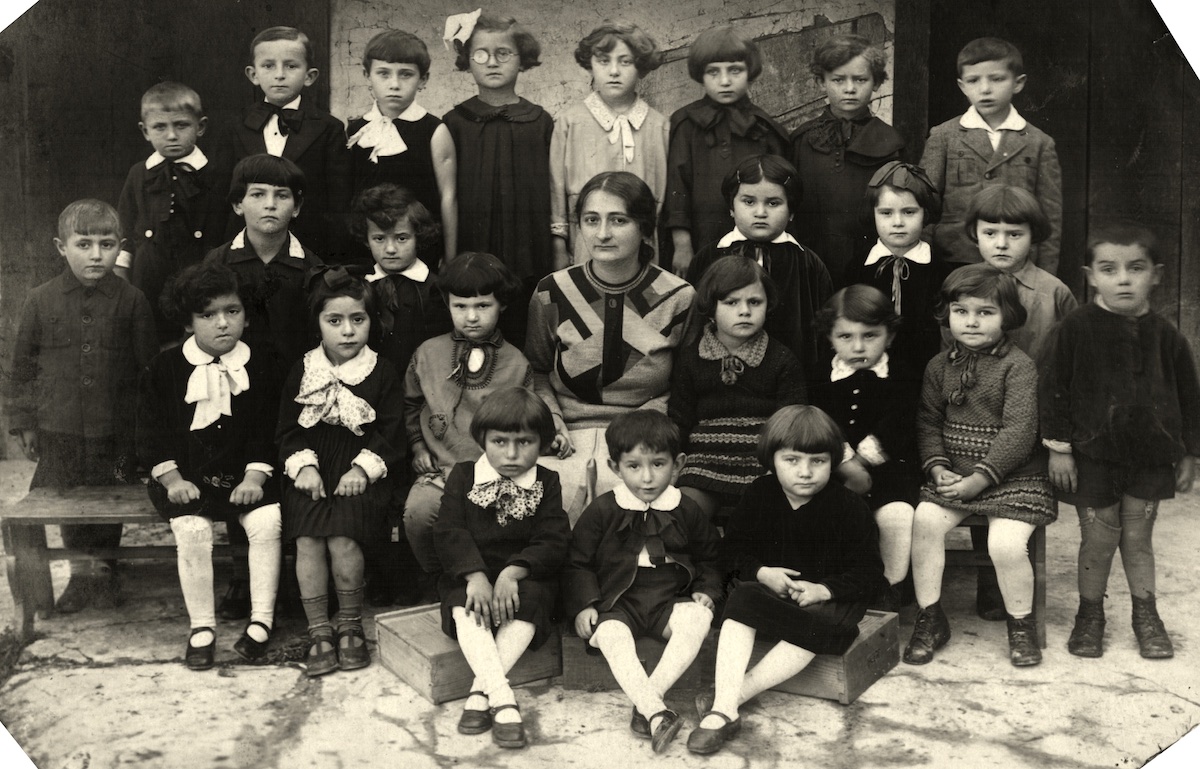
Hebrew school kindergarten class in Rohatyn, 1937. Source: Rohatyn Yizkor Book.
After WWI and residual regional conflicts, all of Galicia became part of
the Second Polish Republic, and
Rohatyn's Ukrainian, Polish, and Jewish communities began rebuilding the town;
the Great Synagogue was rebuilt from its ruined shell, and Jews rebuilt the market square and
their homes from the rubble left by the fires. With modernization the
Jewish community further diversified, now represented by Rabbinic,
Hasidic, and secular Jewish families, and a growing interest especially
among the young in the Zionist movement.
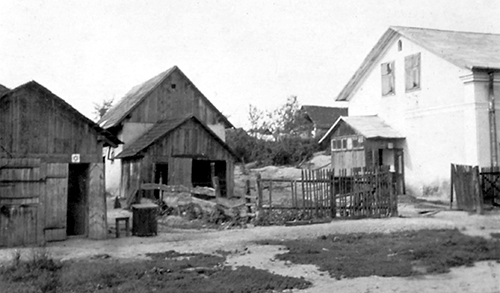
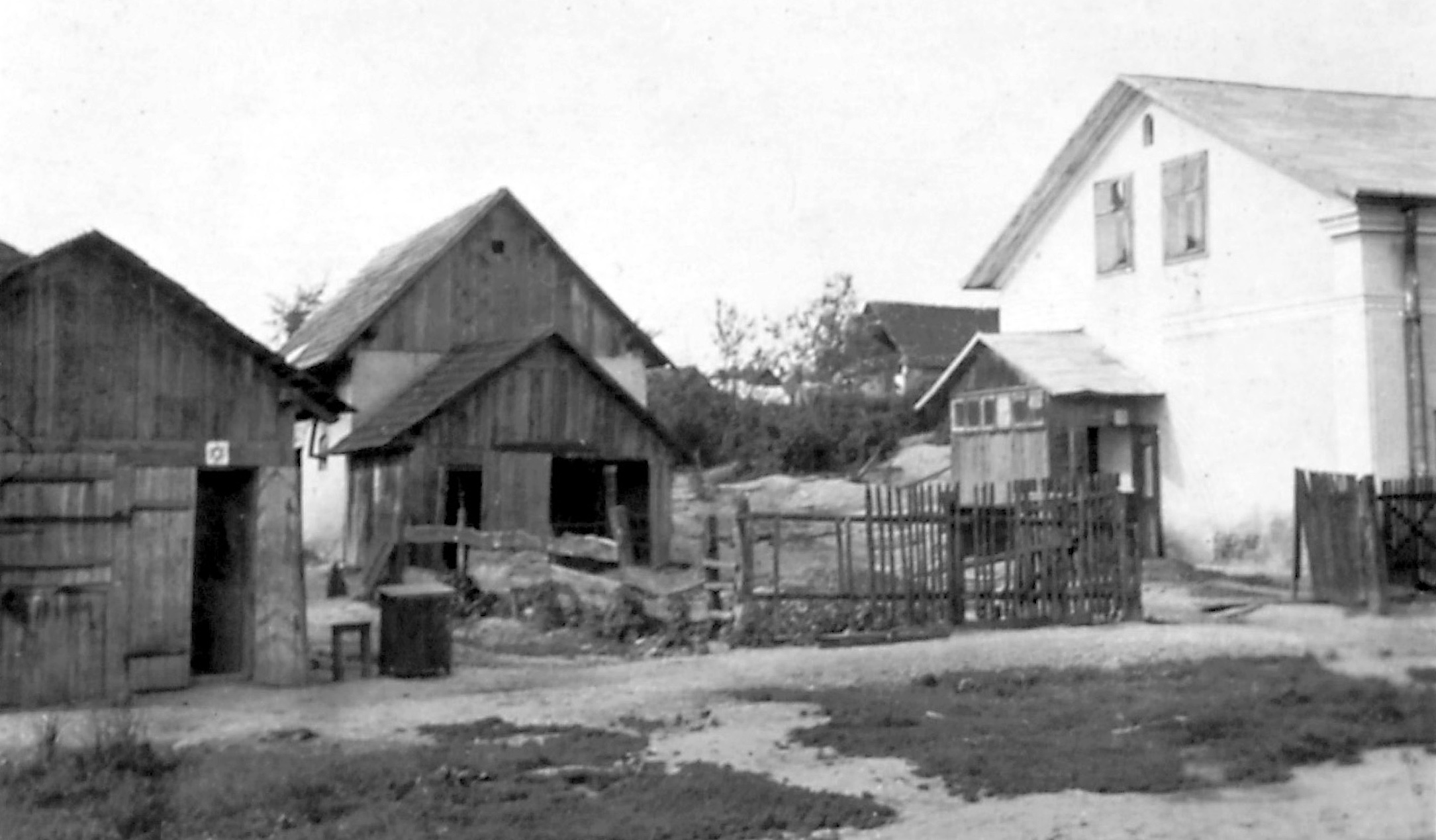
A view of the Rohatyn ghetto, from the 1943 Katzmann report. Source: Instytut Pamieci Narodowej.
During the Soviet occupation of Rohatyn from September 1939,
Jewish ownership of businesses largely ended, and Communist
administrators arrested, tried, and deported wealthy Jewish
families and politicians. With the German occupation of the
town from July 1941, the
Holocaust in Rohatyn
began. One of the
earliest Jewish ghettos
in the region was formed in Rohatyn, imprisoning thousands of Jews from Rohatyn and eventually
incorporating Jewish communities from many of the
surrounding towns and villages. A series of German aktions in
Rohatyn murdered thousands of local and regional Jews at
two mass killing sites on the edge of the town
, and deported more than a thousand more from Rohatyn to
annihilation at the death camp at Bełżec
. Of the ghetto population in the several thousands,
fewer than 200 Jews survived
in hiding in Rohatyn and the forests for the three years of German occupation.
Only a handful of the Jewish survivors remained in the region after liberation; most emigrated to Mandatory Palestine (later
Israel), western Europe, the United States, South America, Australia, and other distant places. There they joined prewar émigrés
and started new families, creating a new global Rohatyn Jewish community.
About the Rohatyn Jewish Cemeteries
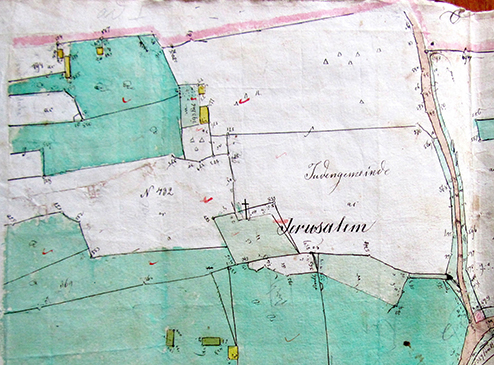
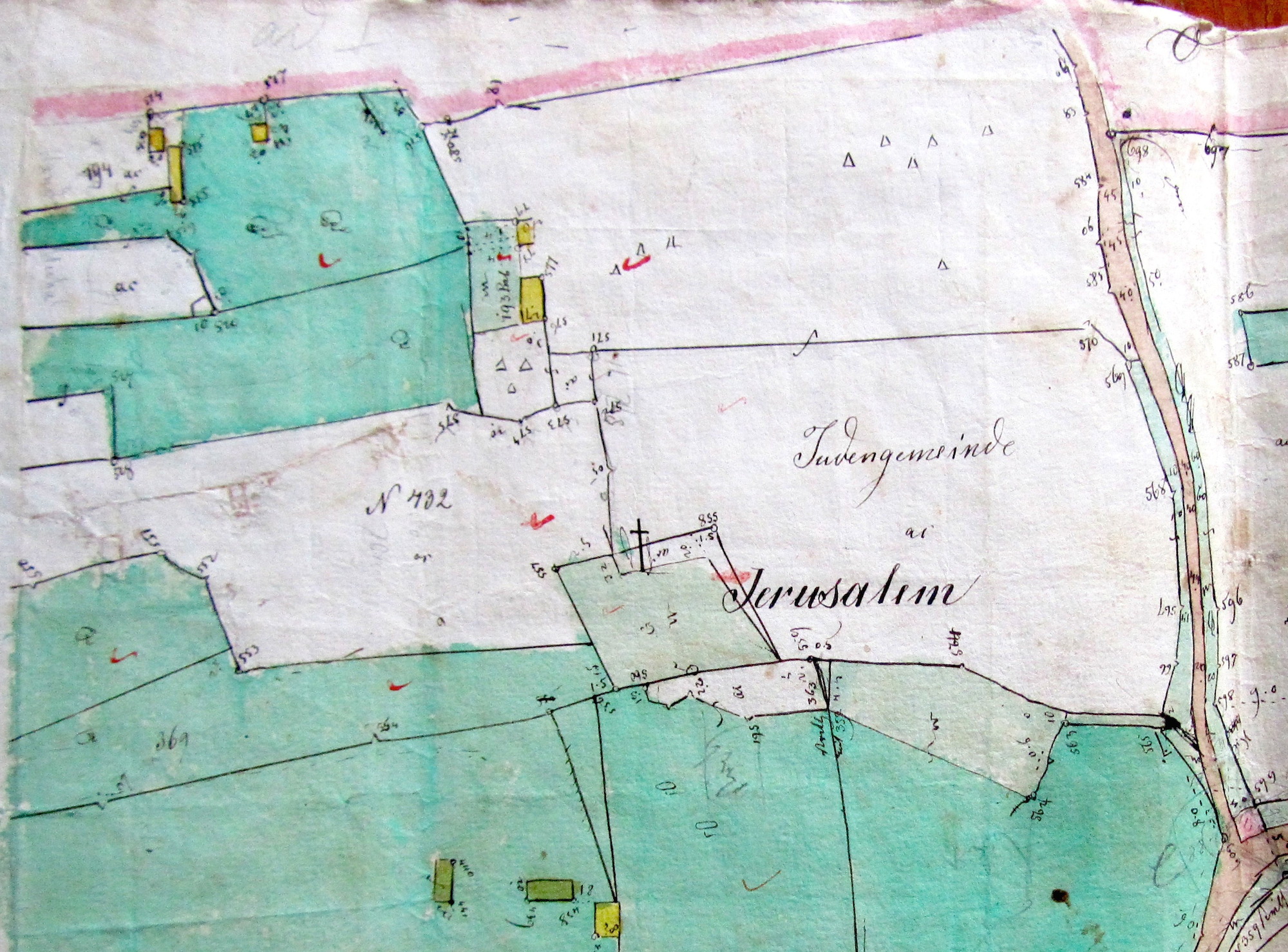
The "old" cemetery seen on the 1846 cadastral map sketch.
Rohatyn still has
two Jewish cemeteries
, known informally as "old" and "new". The first or "old" Jewish
cemetery was likely begun very soon after the Jewish
community of Rohatyn was granted rights in 1633, so is
now nearly 400 years old. It was originally established
outside of the residential areas of Rohatyn and Babintsi
, though as the settlements grew over the centuries the site
has become incorporated into the fabric of the city. The
site is shown and labeled on an
1846 Austrian cadastral (tax parcel) map sketch, adjacent to a mound locally
known as "Jerusalem hill". Although the cemetery is
fairly large (about one hectare), archival records of
Rohatyn municipal proceedings indicate that by the early
20th century the cemetery had run out of space for
burials, and the Jewish community intended to expand
the cemetery onto land it had previously purchased. Objections to that expansion from cemetery neighbors
and an extended legal conflict ended with a decision to seek new land elsewhere for future burials; this
separate land became the "new" cemetery.
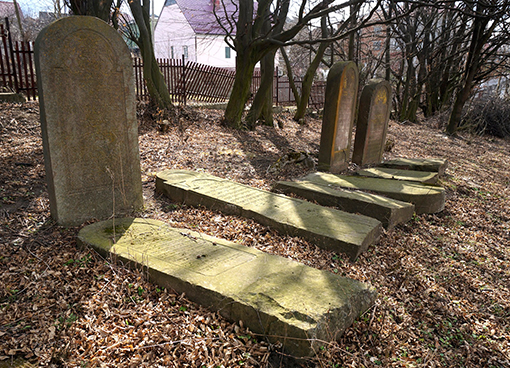
A few surviving headstones in Rohatyn's "new" Jewish cemetery.
The second or "new" Jewish cemetery was
established
near the northern edge of Rohatyn
sometime in the first decades of the 20th century, in
an area which at the time had almost no residences.
This site is smaller than the "old" cemetery, and
because it was in service for only a few decades
before the Holocaust, it likely has a much smaller
number of prewar and wartime burials, though one
Jewish memoir mentions a mass grave there also.
The cemetery does not appear on any known prewar
city maps (typically the maps do not extend north to
the cemetery), but it is clearly visible in a
1944 aerial photo of Rohatyn
taken by the German Luftwaffe during their retreat westward. The aerial
photo demonstrates that the current fenced boundary
of the cemetery is smaller than the site's original boundaries, but it is not clear whether there are any Jewish
burials outside the fence.
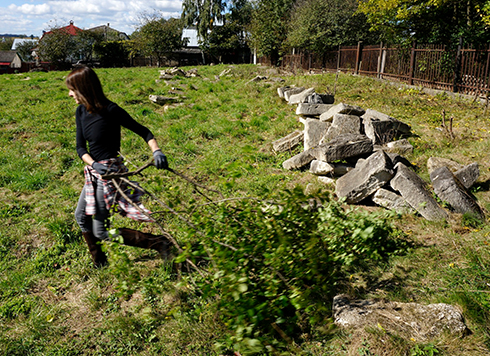
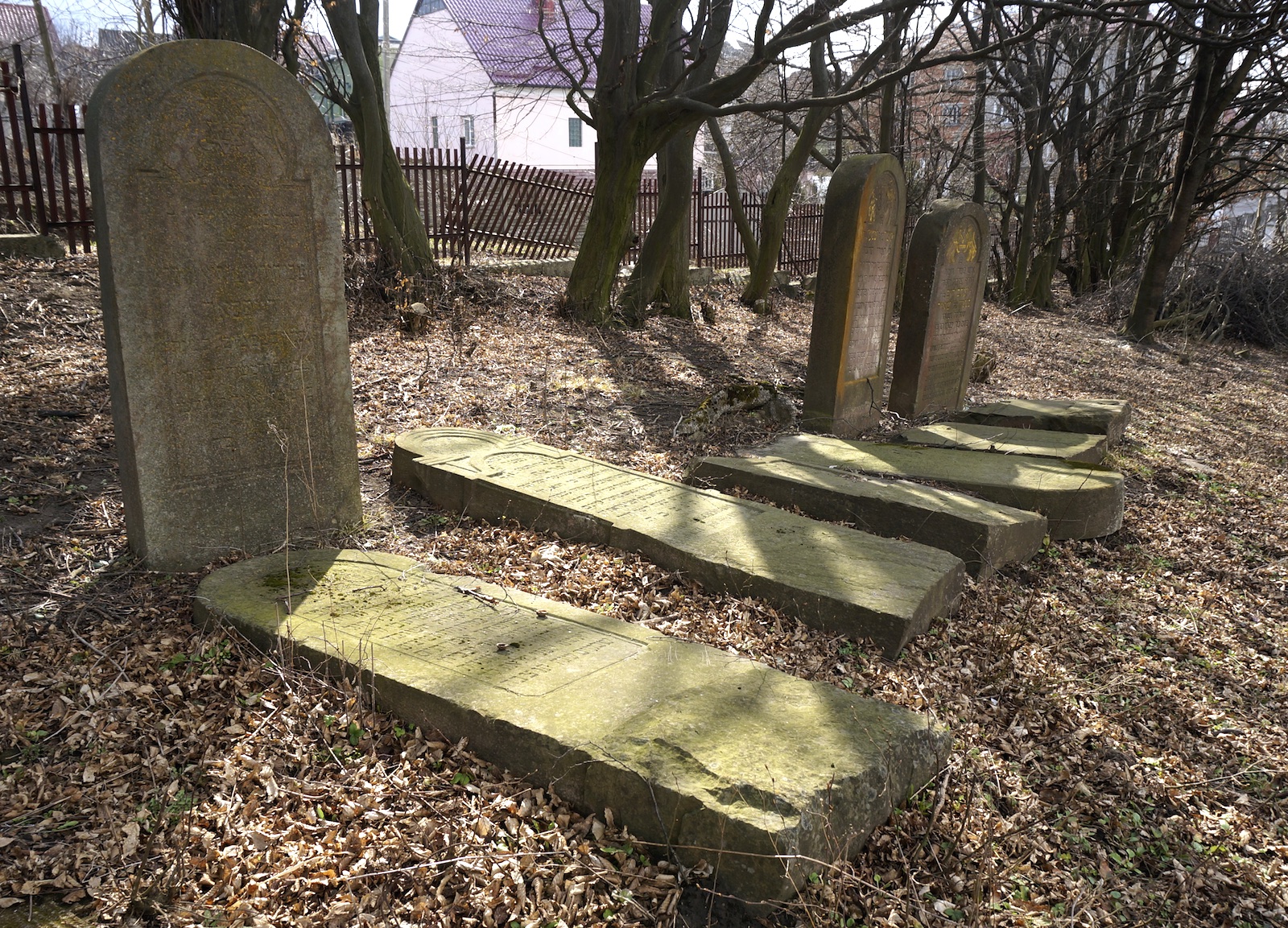
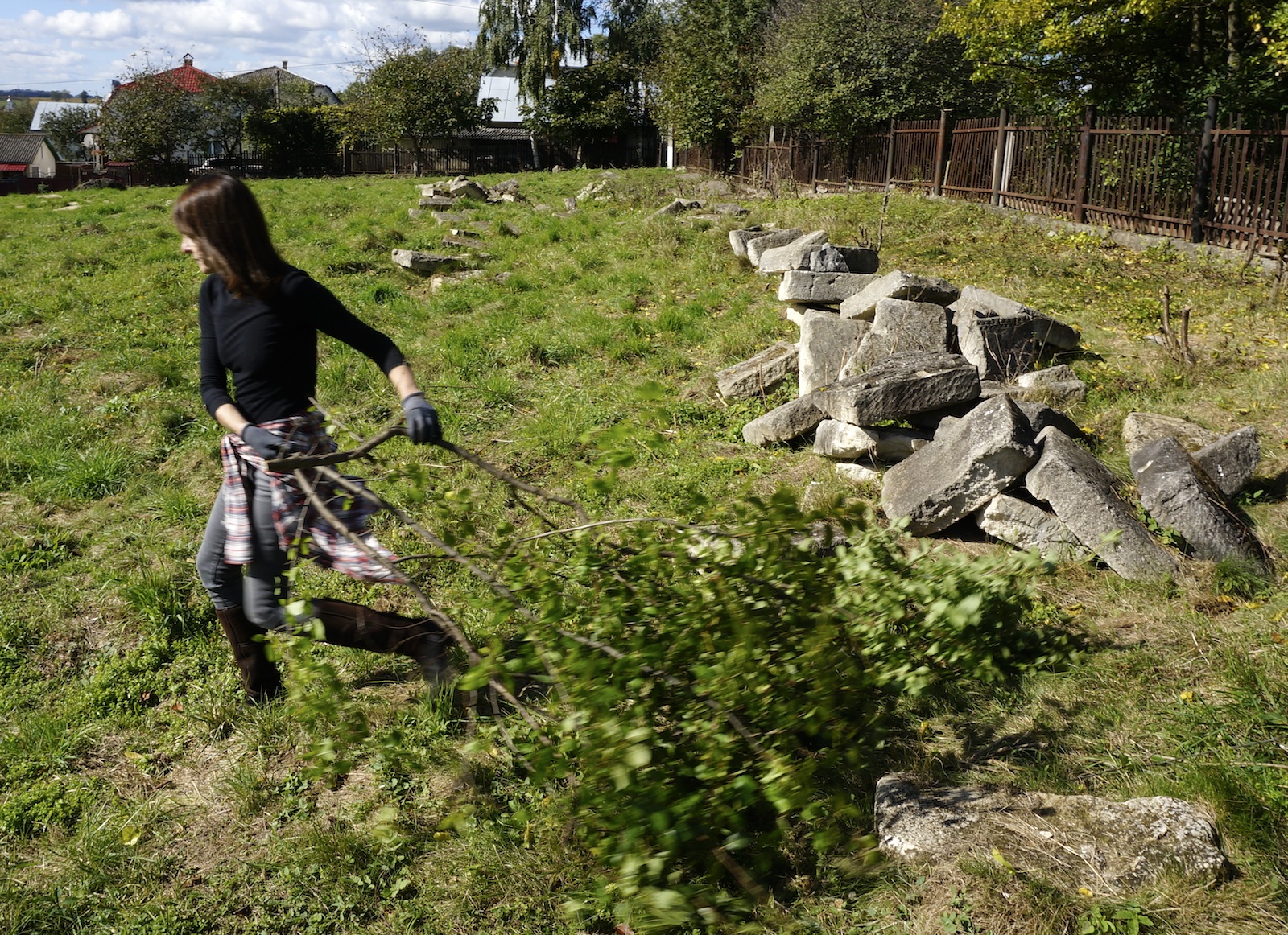
Maintenance work in Rohatyn's "old" Jewish cemetery.
No burial records for either of the Rohatyn Jewish
cemeteries have survived. WWI-era photographs
and a
1930s film of the "old" cemetery
show remarkably dense arrays of tall Jewish headstones
– almost none of which still remain today. During
the German occupation of WWII, and possibly also
during the postwar Soviet era,
nearly all of the headstones in the cemeteries which had marked the graves of Jews for hundreds of years were removed
and used as construction materials for roads, new
building foundations, and other masonry and fill
purposes, mostly disappearing under street surfaces
and building facades. The cemeteries were
practically denuded of markers, and with them the
physical memory of the Jewish community was
destroyed at the same time.
In the 1990s survivors and descendants of Rohatyn Jewish families joined to reestablish the two cemeteries
as memorial spaces, fencing the boundaries and erecting memorial stelæ to commemorate the Jewish
community and its destruction. Today the cemeteries are owned by the Rohatyn civil community, and both
the "old" cemetery and the "new" cemetery are regularly maintained by Rohatyn Jewish Heritage in
cooperation with the Rohatyn City Council and funded by donations from Rohatyn descendants and other
interested people.
About the Rohatyn Jewish Headstone Recovery Project
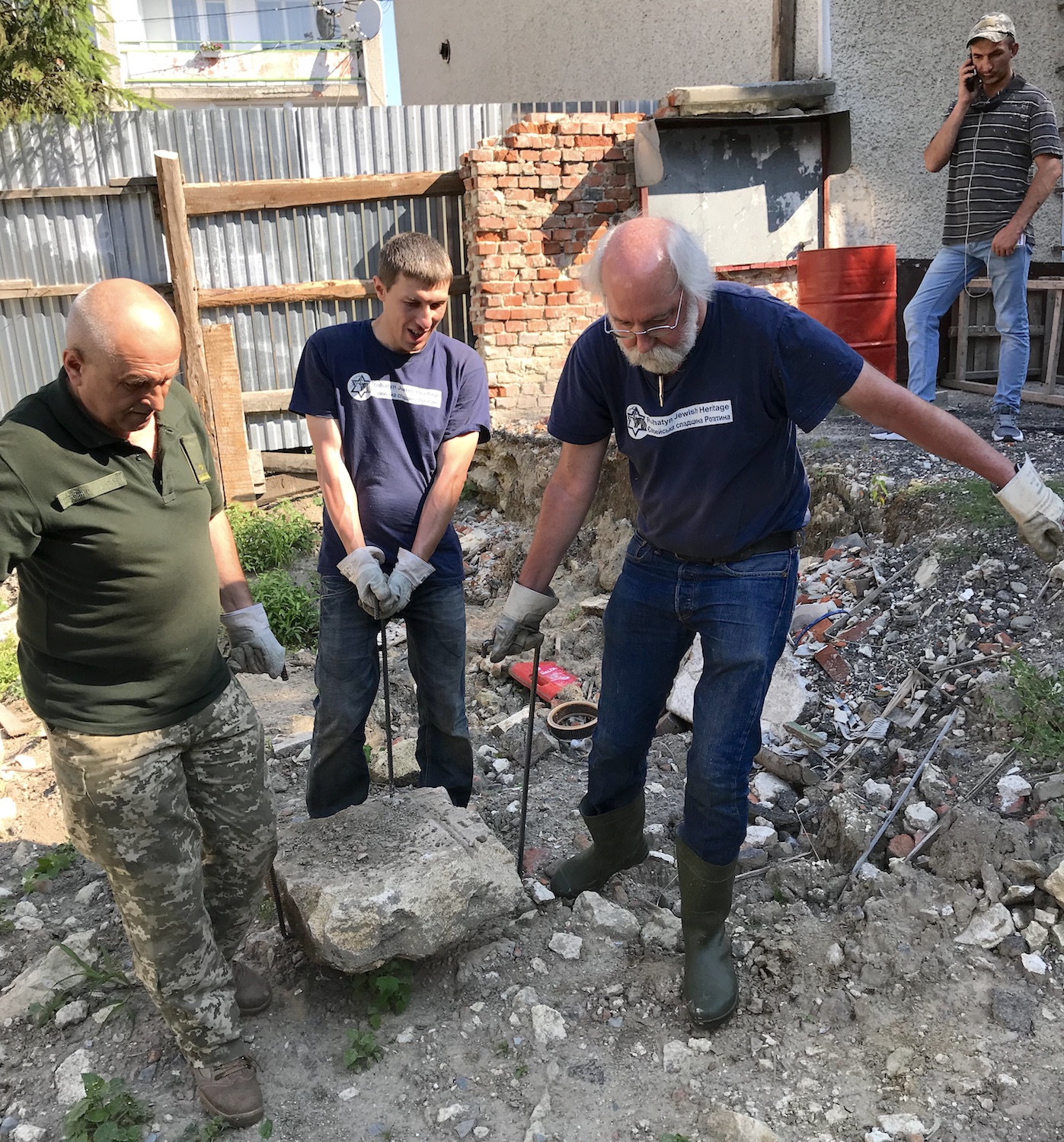
Headstone recovery work in progress.
Efforts to recover displaced Jewish headstones in Rohatyn began
almost as soon as Jewish survivors could return to the town after
Ukraine gained its independence from the Soviet Union in 1991.
Fischel Kirschen led and funded most of the early efforts, in
partnership with local teacher Mykhailo Vorobets, a longtime
activist in the multicultural history of Rohatyn. By the time
Kirschen passed away before 2011, the "old" Jewish cemetery had
about ten intact or broken standing headstones and a similar
number of loose headstone fragments and grave covers, while the
"new" Jewish cemetery had three intact standing headstones,
several mostly-intact downed headstones, and about 25 loose
fragments.
In 2011, Rohatyn Jewish Heritage
joined with the Rohatyn District Research Group
to fund and coordinate Jewish headstone recovery
in the town, renewing the partnership with Mykhailo
Vorobets for local communication, labor arrangements, and
payments. For more than a decade, recovery efforts by townspeople, by the City, and by Rohatyn Jewish
Heritage and its volunteers, have gathered more than 500 headstone fragments and an occasional intact
headstone from around the city and returned them to the "old" Jewish cemetery for safekeeping. Rohatyn
residents have assisted the effort by reporting discovered headstones and in some cases even moving
individual stone fragments to the "old" cemetery themselves.

A group of Jewish headstone fragments during recovery work from under a kitchen garden in the center of Rohatyn.
From the long history of the Rohatyn Jewish community and the known size of its population, it is evident
that the recovery work to date, while significant, represents a very small percentage of the total number of
headstones which once stood in the two cemeteries. It is thus expected that the recovery work will continue
for decades to come.
About the Rohatyn Jewish Headstone Documentation Project
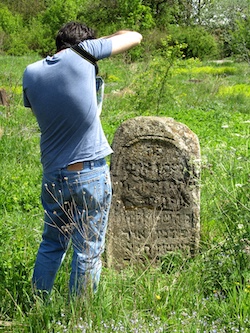
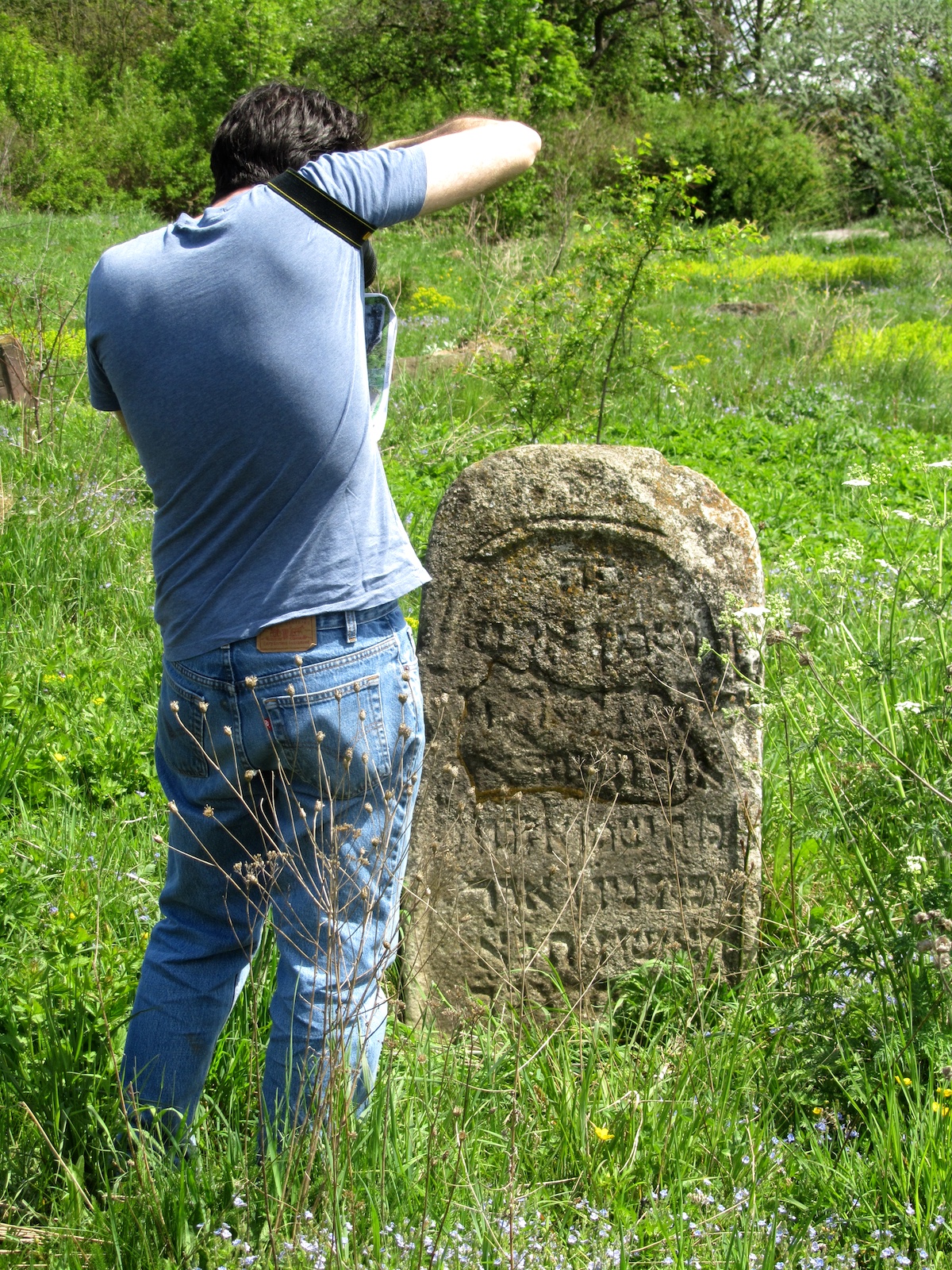
Photographing headstone inscriptions in Rohatyn's "old" Jewish cemetery in 2011.
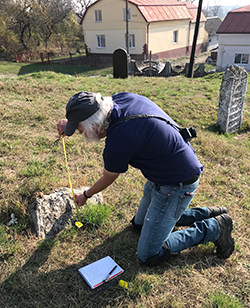
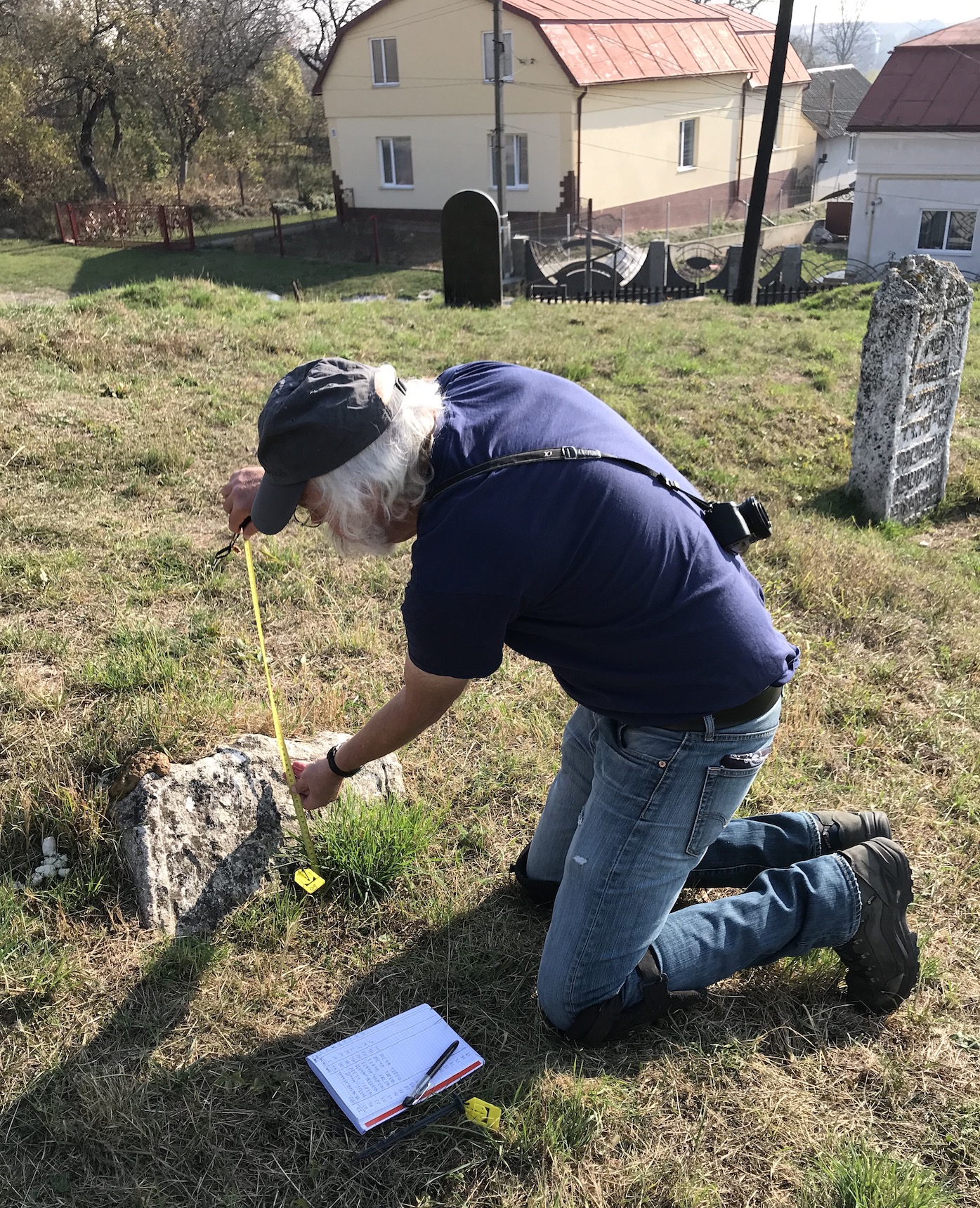
Documenting headstone sizes and locations in Rohatyn's "old" Jewish cemetery in 2019.
Photographic documentation of existing headstones and fragments in the Rohatyn
Jewish cemeteries was made by Dr. Alexander Feller and Jay Osborn for the
Rohatyn District Research Group in May 2011, along with photos in that month of
the first headstone recoveries since the passing of Fischel Kirschen. For the
remainder of 2011 and through the years to the present, photographs of newlydiscovered headstones
(both as or after they were recovered from outside the cemeteries and returned, plus occasional
discoveries of sunken stones within the cemeteries) were taken by Marla and Jay
Osborn for Rohatyn Jewish Heritage. The database project on this
JewishStonesUA
website was developed to enable organization of the partial data already available,
free public access to the data in a bilingual (English and
Ukrainian) format, a search function, and a scheme for collecting more complete data on the larger set of
recovered stones in the future, as time and conditions allow.
Working from the photographs spanning 15 years, transcription of the hundreds of partial and complete
epitaphs in Hebrew and subsequent translation into Ukrainian was done by Tetiana Fedoriv, with technical
support by Vasyl Yuzyshyn. Translation from Hebrew and Ukrainian to English was done by Jay Osborn and
Marla Raucher Osborn. Image and text data entry and verification was done by Vasyl Yuzyshyn with
support from Jay Osborn.
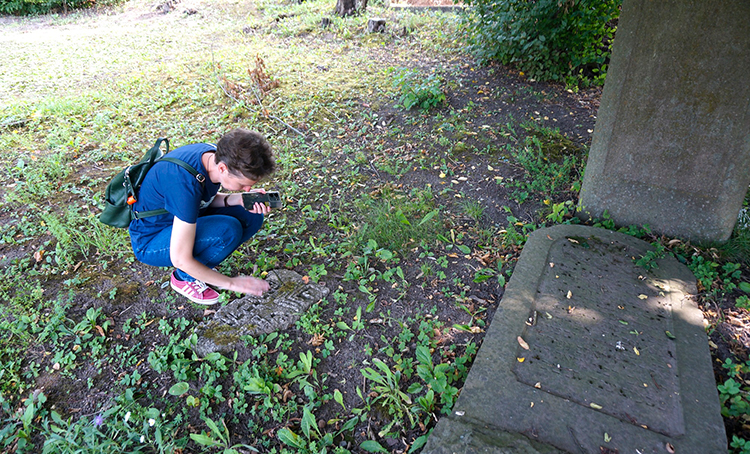
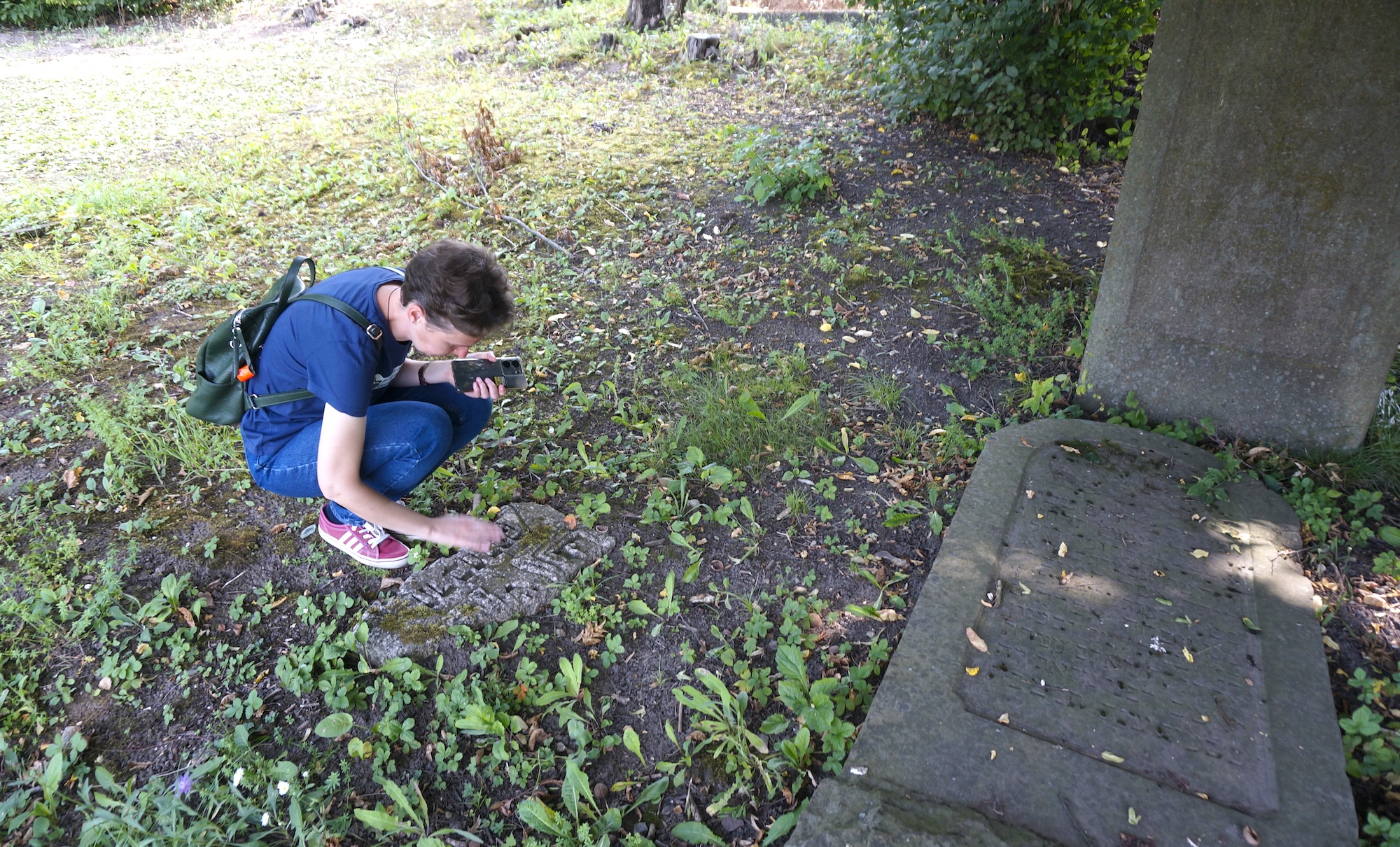
Tetiana working to decipher an epitaph in the new Jewish cemetery in Rohatyn.
Tetiana Fedoriv is a local historian from Zbarazh, a teacher of history and law, and
a graduate of Ternopil Volodymyr Hnatiuk National Pedagogical University. She also
completed the one-year Polish Government Scholarship Program for
Young Scholars at the Jagiellonian University in Kraków and the
International Interdisciplinary Certificate Program in Jewish Studies. She currently
works in the Department of Tourism and Cultural Heritage Protection at the
Department of Economics and Investment of the Zbarazh City Council. Among her
other projects, on her own she completely documented the new Jewish cemetery in
her home town for a book and for
this database website,
and has significantly contributed to the data for
every other town covered here.
To aid in organizing the Rohatyn headstone images and data for this database, the individual stones and
fragments were divided and coded into three categories to distinguish those which are grounded and likely
to remain where they have always been found, those which are loose and almost certainly separated from
the graves over which they originally stood, and those which we know only from prewar photographs and
which may never be found. The three categories are identified in each stone ID with a prefix (RG, RL, or
RX), and are briefly described here:
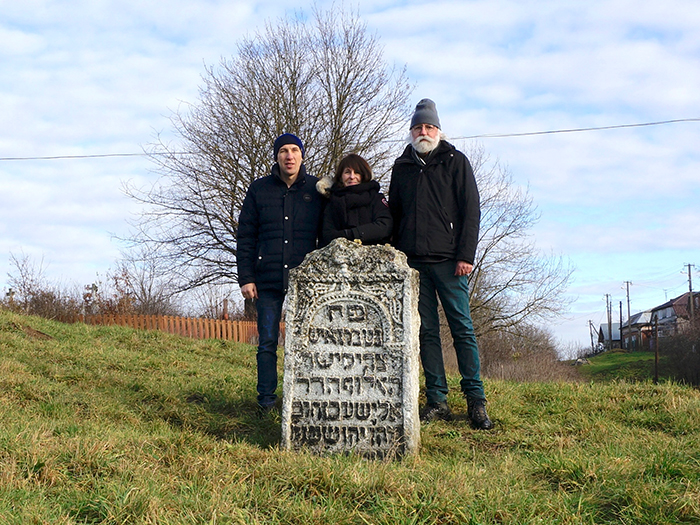
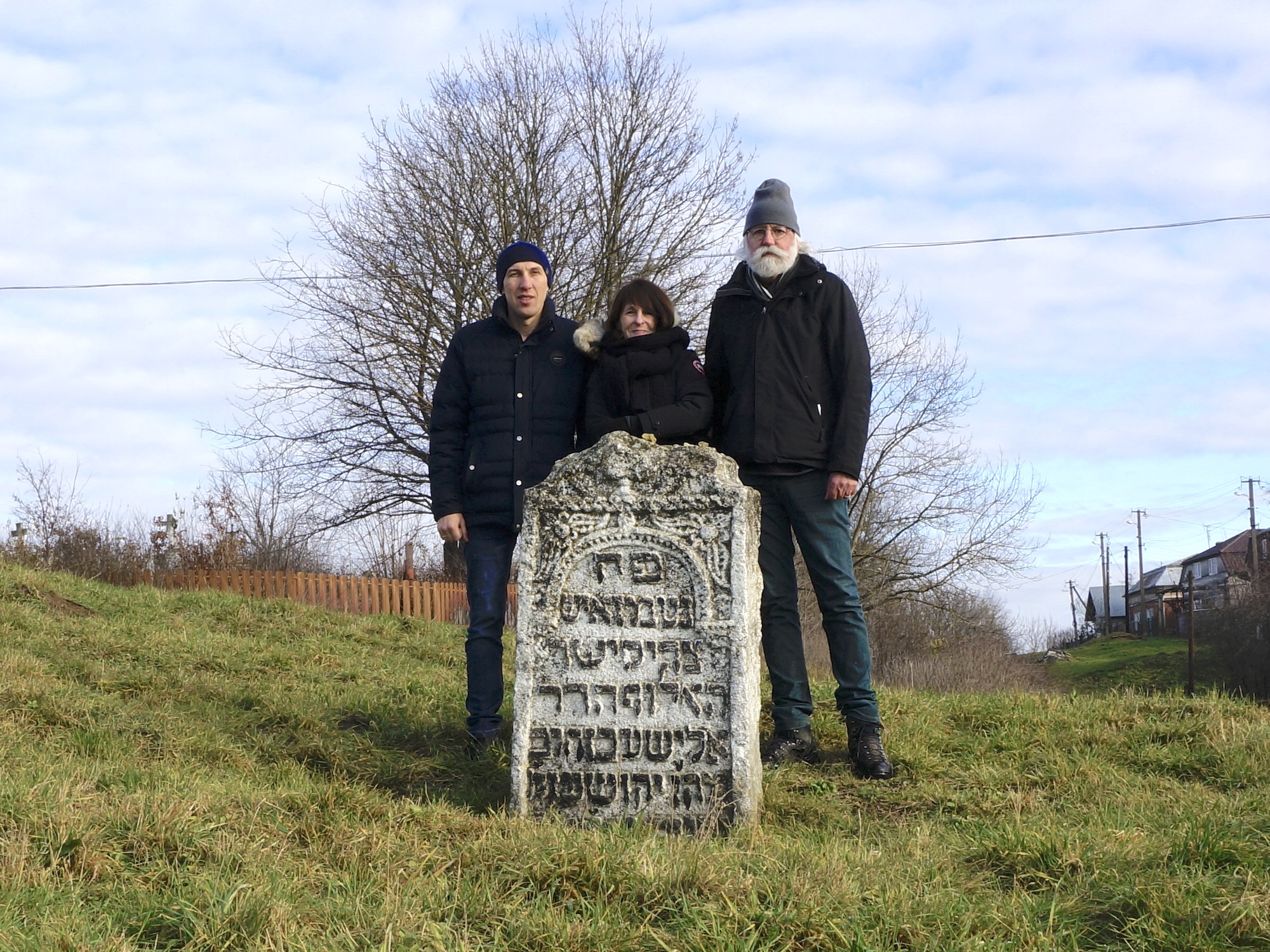
Vasyl, Marla, and Jay standing at the oldest surviving headstone in the old Jewish cemetery in Rohatyn.
RG – Grounded Stones: There are only a total of 54 headstones still anchored in
the ground in the two cemeteries, and of those most are stumps broken off near the
ground with no legible inscriptions, meaning the larger parts of the stones
with information about the deceased are either among the loose stone fragments
recovered since Ukrainian independence, or still hidden under Rohatyn streets and
in buildings, or lost forever. Three remarkably intact and ornate stones still
stand in the new cemetery; in the old cemetery, a few stones still stand upright
or leaning, most of which are broken with incomplete epitaphs. However, the oldest
known intact surviving stone, of
Elisha ben Yehoshua who died in the mid-18th century,
still stands in the old cemetery and is a frequent gathering point for
visitors thanks to its prominent place near the top of the site. Because the stone was lying flat in the
cemetery 30 years ago, it is possible that the stone had been recovered and returned to the cemetery before
then, and was set upright later at a spot which does not correspond to the original grave. But there is some
solace that the stone has survived at all.
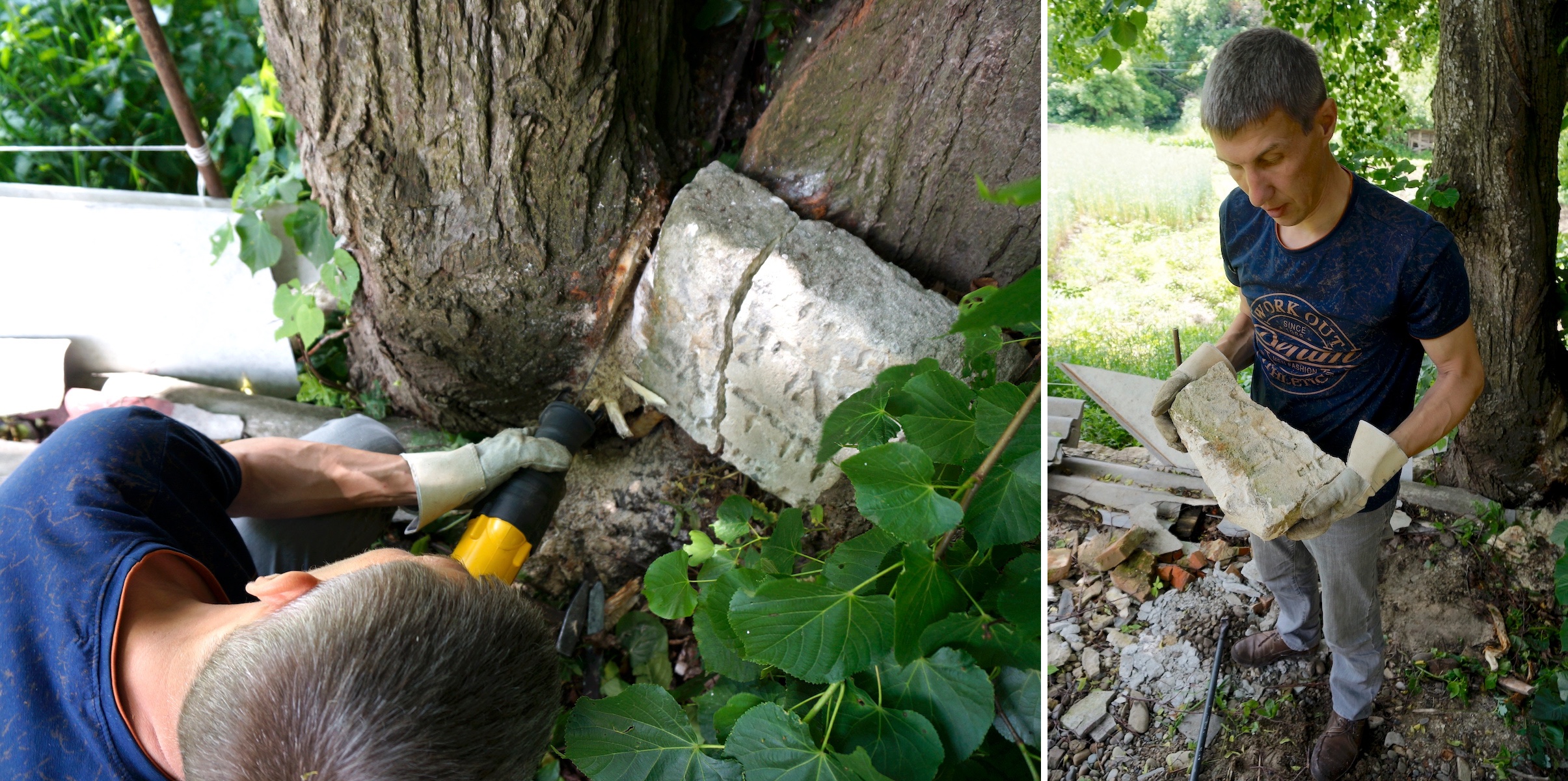
Vasyl recovering stones RL0419 and RL0420 from a tree in 2022, These fragments
from the same original headstone were returned to the old Jewish cemetery.
RL – Loose Stones: This category makes up roughly 80% of the
entries in the database to date, more than 400 photographed and
documented individual headstones and fragments in total. The
majority of these were recovered from around Rohatyn and returned
to the Jewish cemeteries since 2011, but some had been
recovered earlier, including most of the large and intact loose
stones. In nearly every case, it is not known where in the cemeteries
the grave associated with the stone is located, though most clearly
originated from somewhere in the old cemetery. Unfortunately, most of the loose stones are fragments,
typically either a half or a third of an original stone (presumably broken at the time of their theft from the
cemeteries for use as building and road reinforcement material), though a great many are smaller and often
irregular fragments. Because of the damage to these headstones it can be difficult or impossible to identify
names and dates in the epitaphs; some fragments have no remaining epitaph at all. Where a headstone or
fragment was discovered outside the cemeteries in pieces, the recovery effort endeavored to keep the pieces
together; those pieces were assigned separate stone ID numbers but also assigned a group number to allow
tracking and interpretation as for a single stone. (This group field also allows the virtual joining of other
separate fragments which appear to be from a single original stone.)
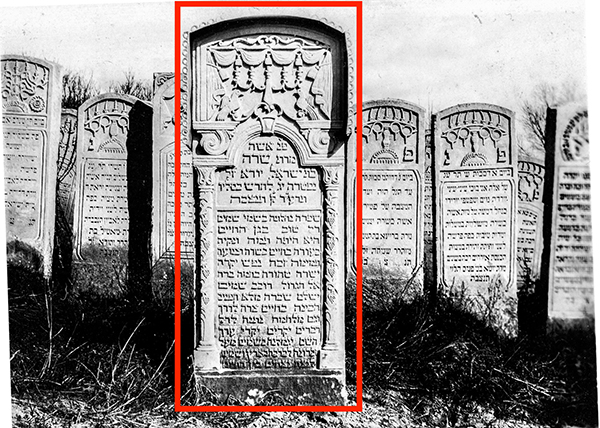
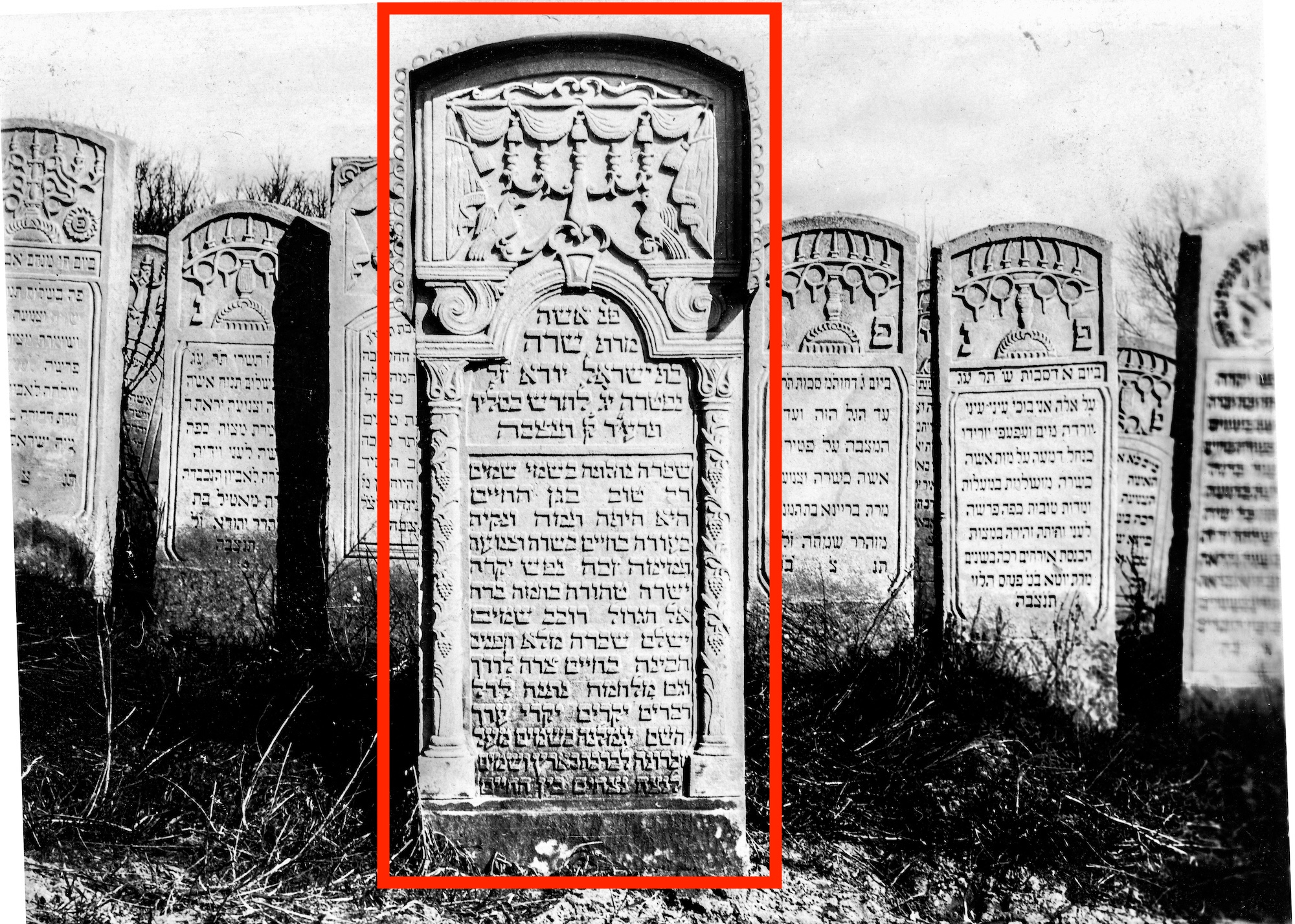
The red box highlights stone
RX0221
for Sara, daughter of Yisrael Yehuda, died in late 1913,
in a prewar photo provided to RJH by collector Tomasz Wiśniewski.
Further research identified her as Sara Kreisler, died at age 70 and buried in Rohatyn.
RX – Missing Stones: This category attempts to recover images and epitaphs
from Rohatyn Jewish headstones which are known only through pre-WWII
photographs. To date, eleven historical photographs have been provided to
Rohatyn Jewish Heritage and the Rohatyn District Research Group by an art
institute, a library, a museum, and a longtime collector of postcards and other
images of prewar Jewish life. Some of the original negatives were labeled "Rohatyn"
by the image authors, others by later researchers based on the files in which
they were found or clues in the images themselves. To date none of the 58
headstones fully or partially visible in the photos match any among the documented
grounded and loose physical stones now in the Rohatyn Jewish cemeteries; these photos may forever be the only record of
the epitaphs they depict. Unfortunately the image quality of some of the photographs is poor; advanced
image processing may be required to enhance and extract portions of those epitaphs, and even to verify that
some photographs were taken in the Rohatyn cemeteries. However, some of the photos are quite clear and
beautiful, and further research confirms the headstones as belonging to known individuals buried in prewar
Rohatyn; the highlighted stone in the image shown here is a wonderful example.
Jewish vital (birth, marriage, death) and other records for prewar Rohatyn are incomplete; a very good
summary of what is currently available has been
compiled with indexing and image links
by the Rohatyn District Research Group. Religious and civil records have made it possible in several cases so far, including
the example above, to overcome the traditional Jewish convention of omitting surnames on headstones in
favor of patronymics, or to bridge over other gaps in the engraved record to identify the unique individuals
to whom these stones once belonged. Jewish descendants of Rohatyn families and other interested
researchers can help to fill in missing information at any time; the database is easy to update/correct.
A "Final" Note
Death is final, and the gradual decay of the headstones which marked the graves of Rohatyn's Jews is
inevitable, but this database and the volunteer effort to build it is an attempt to allow the lost Jewish
community of Rohatyn to linger in awareness and memory for a while longer, both in the city itself and
online. As noted above, only a very small fraction of the thousands of headstones which once stood over
graves in the Rohatyn Jewish cemeteries have been found to date, and the labor to transcribe and translate
the fragmented epitaph record into this database still continues. The Holocaust and the postwar Soviet
occupation of Rohatyn cast a long shadow over Jewish heritage and memory in the city; although damaged,
the record in stone that this database presents can still illuminate some of the lives of those who came before.
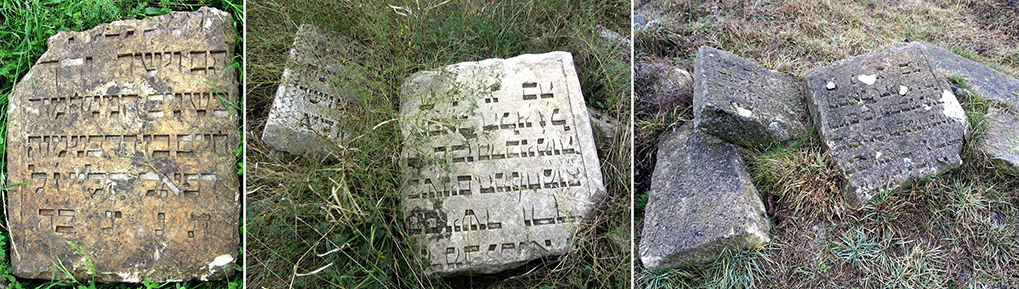
Images of stone RL0090 shortly after its recovery from under a roadway in 2012 and its gradual decay over a dozen years in
Rohatyn's old Jewish cemetery.
References/Sources
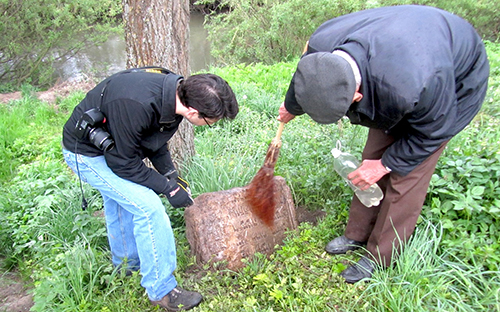
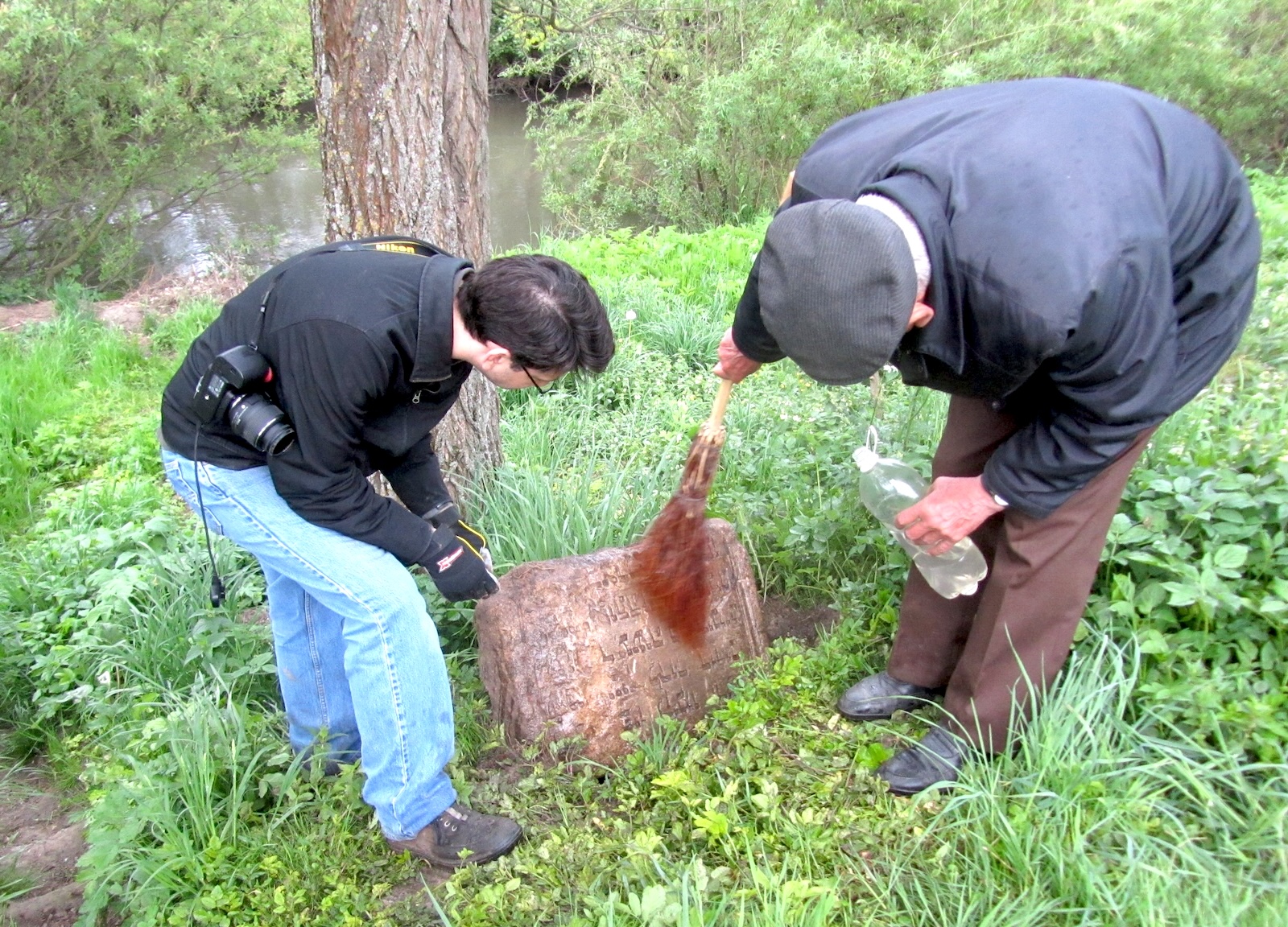
Alex and Mr. Vorobets cleaning
Jewish headstone fragment RL0018
found near the Hnyla Lypa River in Rohatyn in 2011.
-
Wikipedia:
Rohatyn (English)
Rohatyn (Ukrainian)
-
Category: Judaism in Rohatyn;
image collection on Wikimedia Commons, including subcategory Jewish cemeteries in Rohatyn
-
Rohatyn District Research Group (RDRG), an online resource and discussion group for Jewish descendants of Rohatyn
-
Rohatyn Jewish Heritage, a Ukrainian NGO working to preserve the physical heritage of Rohatyn's lost Jewish community
-
A History of the Jewish Community of Rohatyn
, on the website of Rohatyn Jewish Heritage
-
The Jewish Population of Rohatyn
, on the website of Rohatyn Jewish Heritage
-
The Yizkor Book for Rohatyn: Kehilat Rohatyn v’hasviva
, on the website of Rohatyn Jewish Heritage, with links to an online original (image) version hosted by the NYPL, and an online translated (English) version hosted by JewishGen
-
Jewish Cemeteries of Rohatyn
, on the website of Rohatyn Jewish Heritage
-
Jewish Grave Markers: Lost and Recovered
, on the website of Rohatyn Jewish Heritage
-
Old Jewish Cemetery Rehabilitation Project
, on the website of Rohatyn Jewish Heritage
-
New Jewish Cemetery Rehabilitation Project
, on the website of Rohatyn Jewish Heritage
-
Jewish Headstone Recovery Project
, on the website of Rohatyn Jewish Heritage
-
Mapping Rohatyn: 1846 Cadastral Map, on the website of Rohatyn Jewish Heritage, based on a digitally stitched version of the historic map sheets created for the RDRG and Gesher Galicia
-
Rohatyn Interactive Data Map 1846, with linked vital, property,
and other historical records data for residents, on the website of Gesher Galicia
-
Jewish Neighborhoods of Rohatyn ca. 1846,
an analysis of mid-19th century demographics and the geography of Rohatyn, on the website of Rohatyn Jewish Heritage
-
Mapping Rohatyn: 1944 Aerial Photo, on the website of Rohatyn Jewish Heritage, based on an image sourced from NARA by the RDRG
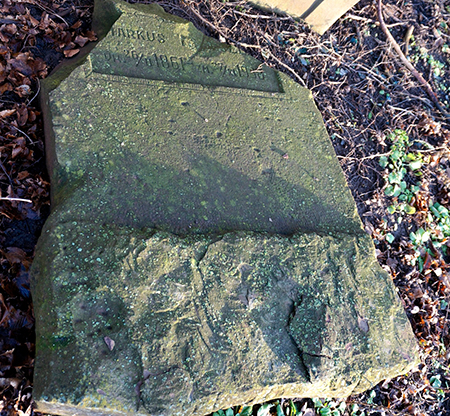
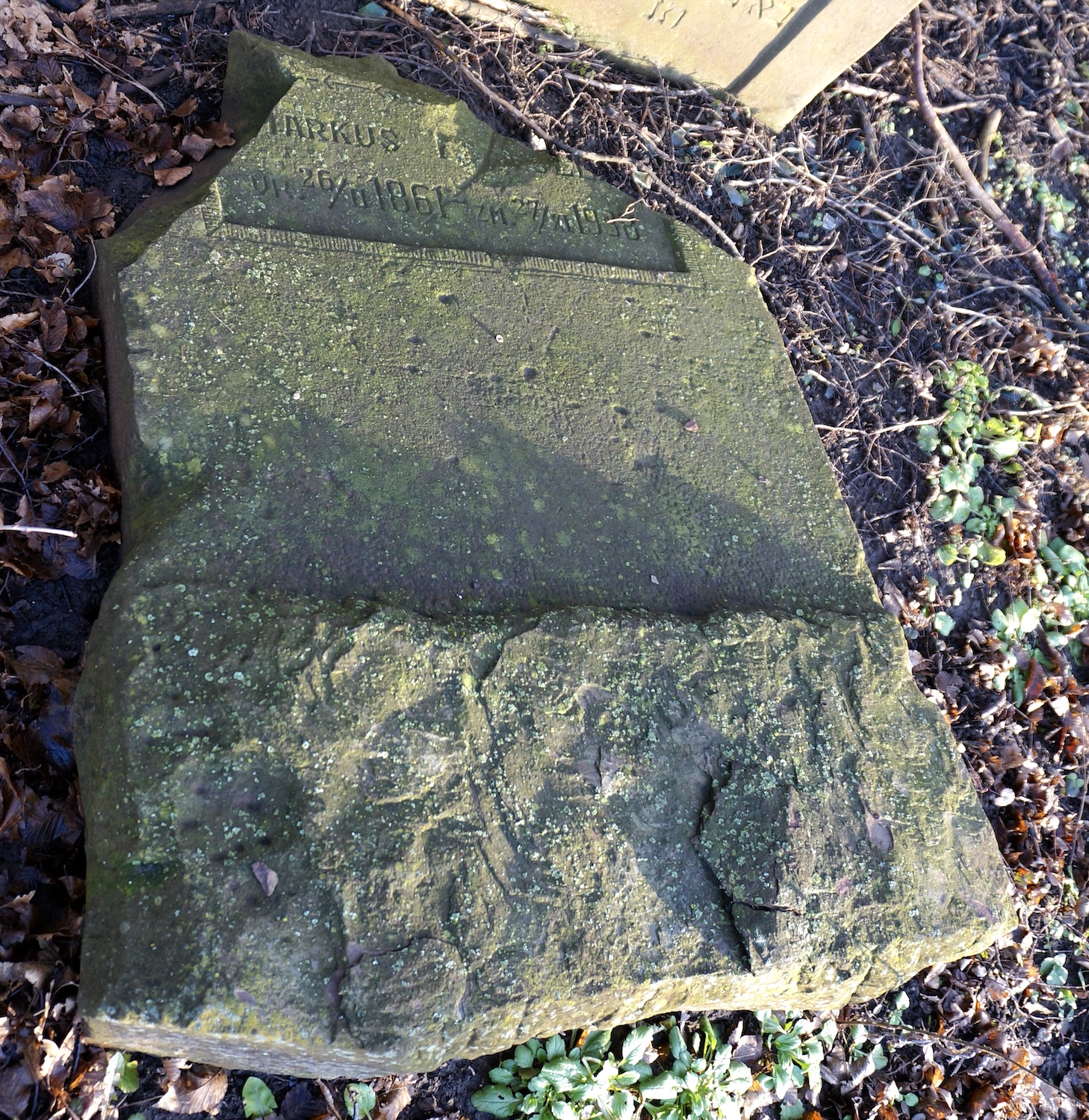
The birth and death dates on
stone RL0006
in the new cemetery were enough to identify this fragment as belonging to Markus Kreisler of Rohatyn.
-
Rohatyn, Ukraine,
on the website of JewishGen KehilaLinks
-
Jewish and other victims of the Nazi occupation of Rohatyn, in three lists from the Soviet Extraordinary State Commission:
1944 fragment for the city;
1945 complete report for the district;
an extensive list from an unknown original source;
on the website of Rohatyn Jewish Heritage
-
The Bezalel Narkiss Index of Jewish Art,
a digital database project of the Center for Jewish Art at the Hebrew University of Jerusalem;
a search on "Rohatyn"
results in image collections for the Jewish cemeteries in Rohatyn as well as Holocaust memorials and more
-
Rohatyn Old Jewish Cemetery,
cemetery survey and description on the website of ESJF (European Jewish Cemeteries Initiative)
-
Rohatyn New Jewish Cemetery,
cemetery survey and description on the website of ESJF (European Jewish Cemeteries Initiative)
-
Ivano-Frankivsk Oblast: Identified Jewish Cemeteries,
on the website of Jewish Cemetery Preservation in Western Ukraine
-
Rogatin: Rohatyn, Rohatin, Rogatin, Ivano-Frankivsk Oblast,
cemeteries and mass graves description on the database of JewishGen's Cemetery Discovery Project
-
Rozwiązanie kwestii żydowskiej w Dystrykcie Galicja
(the "Katzmann Report"); Instytut Pamieci Narodowej (IPN); prepared by Andrzej Żbikowski; Warszawa, 2001. Includes a complete photographed
image copy of the original report, plus a Polish translation, plus critical analysis in Polish language;
English translation as document L-18 in Nazi Conspiracy and Aggression, Volume VII;
Office of United States Chief Counsel for Prosecution of Axis Criminality; U.S. Department of State, U.S. War office,
and International Military Trials – Nürnberg; U.S. Government Printing Office, 1946,
p.755~770;
sourced from U.S. Library of Congress; see also the Rohatyn Jewish Heritage article
The Katzmann Report and Rohatyn
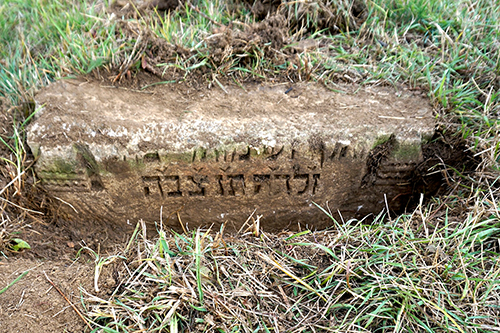
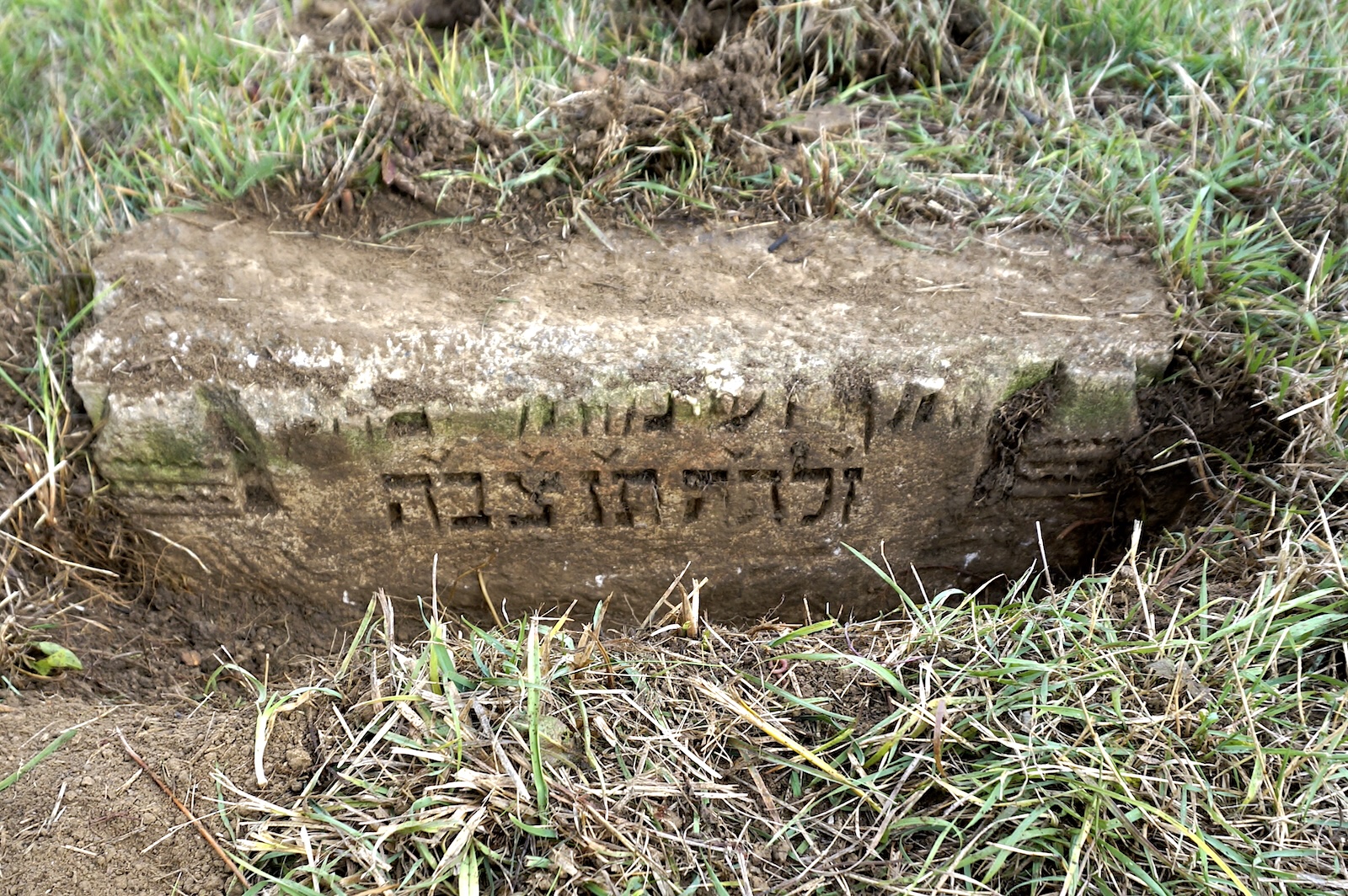
All that remains of the grounded
stone RG0014
at the top of the old Jewish cemetery of Rohatyn: "blessed be their memory, may their soul
be bound in the bond of (eternal) life".
-
Rohatyn, in the Encyclopedia of Camps and Ghettos, 1933-1945,
Volume II: Part A, pages 821~822, by the USHMM (United States Holocaust Memorial Museum);
also: Eastern Galicia Region (Distrikt Galizien), pages 744~749; see also
a summary article on the website of Rohatyn Jewish Heritage
-
Nationalsozialistische Judenverfolgung in Ostgalizien 1941-1944:
Organisation und Durchführung eines staatlichen Massenverbrechens
(National Socialist persecution of Jews in Eastern Galicia 1941-1944:
Organization and execution of a state mass crime); Dieter Pohl; Studies in
Contemporary History, Volume 50; Institut für Zeitgeschichte, Munich, 1997
-
Case Study 05 – Vegetation Clearing and Cleaning: Rohatyn New Cemetery;
overview and details with photographs of organized cemetery clearing and maintenance efforts at the "new" cemetery in Rohatyn
from 2017 forward, on the Fulbright-sponsored research project website
A Guide to Jewish Cemetery Preservation in Western Ukraine
-
Case Study 07 – Headstone Recovery and Return: Rohatyn Old Cemetery;
overview and details with photographs of the headstone recovery efforts from 2011 forward around the city of Rohatyn, on the
Fulbright-sponsored research project website
A Guide to Jewish Cemetery Preservation in Western Ukraine
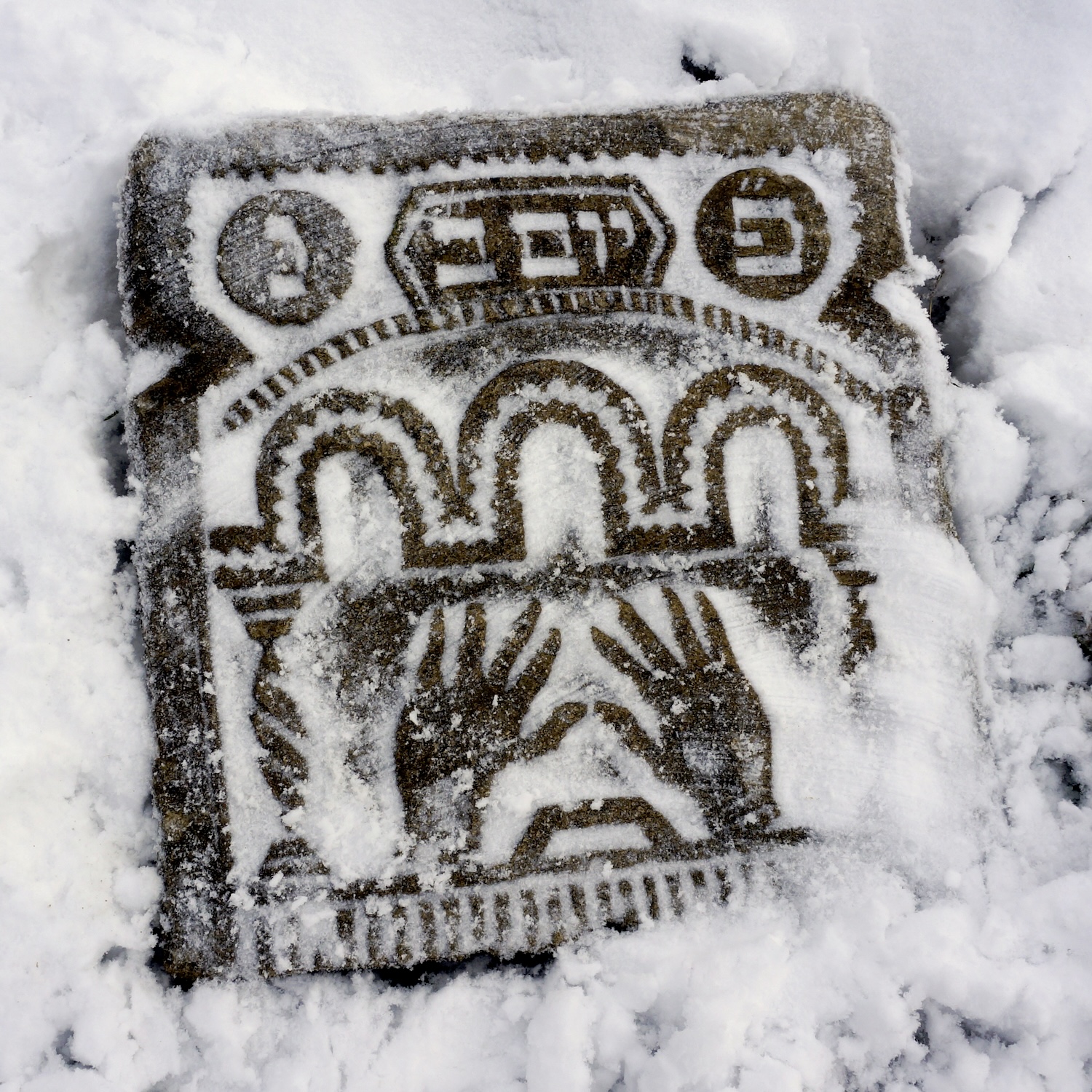
The loose stone RL0222, now in the old Jewish cemetery of Rohatyn,
with only a fragment of the symbolic upper portion of the original stone
remaining; the blessing hands identify the deceased as a Kohen, a
member of the hereditary priestly class in Judaism.
-
From Brody to Berezhani –
a photo and text essay from April 2013 covering travel through former eastern Galicia visiting
sites of Jewish heritage including Rohatyn's two cemeteries, from Christian Herrmann’s
Vanished World blog site
-
It’s all gone, it’s still there –
a photo and text essay from May 2013 reflecting on the
discovery, recovery, and uncertain future of displaced Jewish headstones including
from Rohatyn's two cemeteries, from Christian Herrmann’s
Vanished World blog site
-
Between Lviv and Ternopil –
a photo and text essay from April 2017 covering travel
through former eastern Galicia visiting sites of Jewish heritage, documenting the
growing number of recovered headstones gathered at Rohatyn's two cemeteries, from Christian Herrmann’s
Vanished World blog site
-
Exhibition: Traces of Jewish Life in Galicia and Bukovina –
a photo essay in black and white of sites of Jewish heritage
including Rohatyn's old cemetery, from Christian Herrmann’s
Vanished World blog site
-
Star Trek från Rohatyn
(Star Trek from Rohatyn) – an illustrated essay from January 2018 on the RJH
headstone recovery project in Rohatyn and the symbolism of the blessing hands gesture on some stones, by Sonia Engström for her
viewpoint-east.org blog
-
... om detta må alla som kan berätta ...
(... let all who can tell the story, do so ...) – an illustrated essay
from June 2019 on the recovery of Jewish headstone fragments in Rohatyn and on the importance of
commemoration, by Sonia Engström for her
viewpoint-east.org blog


 ROHATYN | JEWISH STONES UA